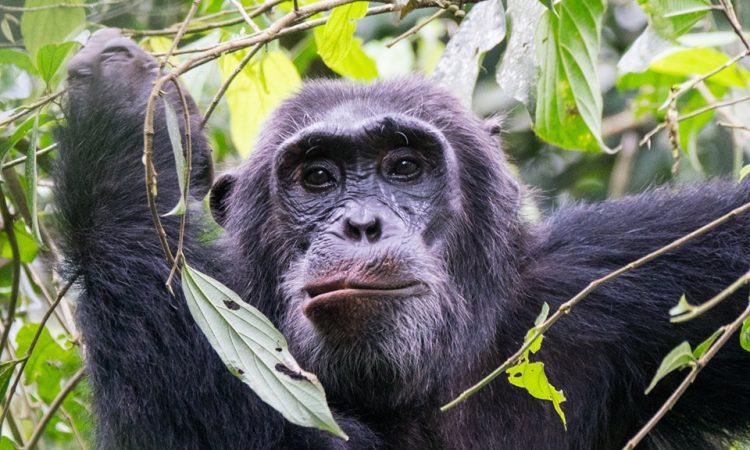
If one ever wonders, who are the closest relatives of humans in the wild, then chimpanzees are undoubtedly the right answer. These loud and stubborn primates are our closest living relatives sharing over 98.7% of the human DNA. It’s so mind blowing how the chimpanzee’s behaviours, and social intelligence feel more like humans. Without doubt, Uganda is one of those few spots in Africa to see chimpanzees in their natural shelter. Unlike the calm gorillas, chimpanzees are energetic, curious, and full of vibe, making every encounter stick to the visitor’s memory. With its high population concentration, the country offers some of the best chimpanzee experiences on the African continent.
Where to track chimpanzees in Uganda.
As it stands, Kibale National Park is the paradise of chimps in the country.. The dense rainforests of Kibale lie in the western part of Uganda. The spot alone shelters over 1,500 chimp individuals, making Kibale one of the largest hosts of the loud and jumpy primates in the region. All the habituated chimpanzee groups in Kibale are easier to track, with high spotting chances, blending with other smaller primates, makes Kibale a finest primate spot for many.
Budongo Forest is another favourite primates paradise for many visitors, situated within Uganda’s oldest and largest Murchison Falls National Park, Kaniyo and Soso are some of the most popularly chimpanzee communities inhabited in the forests of Budongo.
You can’t talk about chimpanzee tracking in Uganda and leave out Kyambura Gorge in the mighty Queen Elizabeth National Park. Given the nature of the gorge, chimps here live in deep, riverine dense forests surrounded by savannah. The gorge in Uganda’s most visited tourism destination also shelters other smaller primates like the golden monkeys and olive baboons. Kalinzu Forest Reserve, along the scenic route to the vast Queen Elizabeth, is a more budget friendly option for chimpanzee tracking in the country bringing a quieter yet intense chimpanzee experience.
Ngamba Chimpanzee Island Sanctuary on the fresh waters of Lake Victoria is more than just a chimp tracking sector, and serves as a rehabilitation centre too, offering visitors a rare chimp experience.
Social Structure and chimp life span.
With both Kibale and Budongo as the largest host, Uganda shelters over 5,000 chimpanzee members making it one of the few spots with high concentrations of these primates on earth. Chimpanzee groups often consist of 20 to 150 members, that separate into smaller other groups that may travel to socialise before they can unite again. Like many primates, chimpanzee communities are often led by an alpha dominant male, along with other males available. In order to halt inbreeding, female chimps often split to other groups once they clock maturity. Under better health conditions and favorable weather, chimpanzees can live up to 40 to 50 years of age, slightly longer than the gorillas, even though many don’t survive longer as a result of diseases or injuries sustained from community fights. The young chimps tend to stay closer to their mothers for a big time, learning social and survival skills.
Chimpanzee tracking experience in Uganda.
Unlike gorilla trekking, chimpanzee trekking in Uganda is actually more fun, and full energy. The chimp session kicks off early, when the chimps are at their best activeness, especially before the sunrise. After a briefing on the guidelines, like staying at least 7 metres away in proximity to the primates or not eating around them, visitors can now head into the deep forests in accompaniment with park rangers for safety and sometimes trackers who are well versed with vocalisations of the chimps. The tracking session can take about 30 minutes close to 4 hours depending on where the chimpanzees are feeding from. Once visitors spot the chimps, they are allowed to spend one hour with them, just like the gorillas. Given their jumpy movements, unlike the gentle gorillas,, the whole chimp experience feels exclusive.
Best time for chimpanzee trekking, and what to actually pack for a seamless chimp experience.
Without doubt, the dry seasons from December to February and June to September stand out as the perfect timing for smooth chimpanzee experience in Uganda. The drier period offers firmer trails, along with short cleared vegetation making the chimps easier to spot. Wet seasons, especially around March to May, bring lush vegetation, but trails trap water making hikes stressful, and the lush vegetation may make locating chimps a challenge.
Chimp pack list.
The nature of many terrains in Uganda’s national parks along with changing weather conditions can be tricky, even worse during the rainy season, so packing the right gear like waterproof hiking boots, along with long trousers and long sleeved shirts is critical regardless of the weather. Binoculars and quality cameras for stunning views and memory shots add a deeper experience. Chimpanzee trekking is physically demanding too, packing drinking water and small eats is key.